Retro Jukebox Outline SVG Clipart Review
As a designer who spends half her life staring at stitch density charts and the other half worrying about whether a client’s logo will pucker on a cotton blend, I don’t just look at an embroidery file; I look at how it behaves. When I first pulled up Retro Jukebox Outline SVG Clipart, my initial reaction wasn’t just about the nostalgia factor—though that is certainly present—but about its structural integrity for actual production. This isn’t just a pretty picture; it’s a functional asset for anyone running a small embroidery business or crafting personalized gifts.
The design falls squarely into the Crafts and Graphics categories, but in the world of machine embroidery, those labels mean nothing if the digitization doesn’t hold up under the needle. My goal here is to strip away the marketing fluff and give you a practical breakdown of how this embroidery project translates from a digital screen to a physical finished product.
First Impressions: Mood and Visual Personality
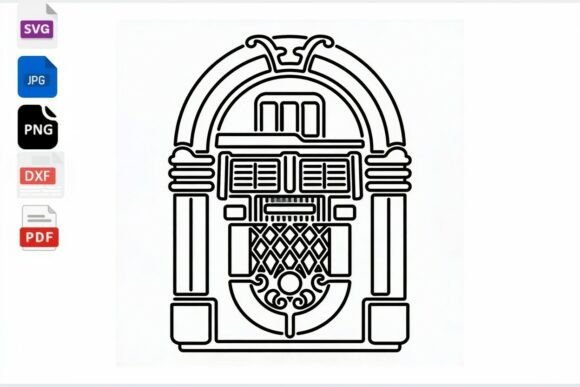
The moment you load this file, you are greeted with a distinct mid-century aesthetic. The silhouette captures the essence of a classic diner jukebox with clean lines and recognizable curves. For an outline-based design, clarity is king. If the curves are too jagged or the proportions off, the entire image loses its charm when stitched. In this case, the visual personality feels confident and playful without being cluttered.
This kind of machine embroidery design works exceptionally well because it relies on strong shapes rather than intricate internal details. It creates a mood that is instantly recognizable—a nod to 1950s rock and roll, diners, and vintage Americana. For a crafter looking to add character to a plain item, this provides immediate visual interest. It’s not subtle, but it doesn’t need to be. It’s designed to be seen, worn, and admired.
Real-World Application: Where This Design Shines
Let’s talk about where this actually lives in the real world. I recently imagined using this embroidery file for a custom order: a set of matching aprons for a couple opening a small home bakery. The husband wanted something rugged, and the wife wanted something sweet. The retro vibe of the jukebox fit perfectly as a central graphic on the chest area of their aprons. It felt personal, thematic, and professionally executed.
Beyond kitchen wear, this design is incredibly versatile for various custom apparel items. Here is how I see it performing in common scenarios:
- Tote Bags: A canvas tote featuring this outline is a staple at craft fairs. It appeals to music lovers and vintage enthusiasts alike. The bold outline stands out against natural canvas or black fabric.
- Sweatshirt Embroidery: There is a massive market for oversized, vintage-style tees and hoodies. Placing this design on the back of a crewneck sweatshirt creates an instant statement piece. The simplicity of the outline allows for creative thread color choices, like gold or silver metallic threads, to pop against dark fabrics.
- Baby Embroidery: While it might seem like a stretch, a mini version of this design on a baby blanket or a onesie adds a unique touch. It breaks away from the usual animals and clouds, offering parents something with a bit more edge and personality for their little ones.
- Embroidered Patches: If you sell patches on Etsy, this is a winner. The clean lines make for easy trimming (if applique) or clean satin borders. It fits well on denim jackets, backpacks, and beanies.
- Holiday Embroidery: Think of holiday gifts for musicians or music teachers. A personalized pillow cover or tea towel with this design makes for a thoughtful, handmade gift that feels curated rather than mass-produced.
Technical Considerations for Stitching Success
Even the best-looking design can fail if the technical execution is ignored. Because this is an outline design, its success depends heavily on how you handle the stitching parameters. Here are some critical notes for designers evaluating this for commercial use.
Stitch Density and Thread Colors
An outline design typically uses a combination of satin stitch for the border and potentially running stitch or light fill for any internal accents. You must check the stitch density. If the outline is too thin, the fabric may show through. If it is too dense, the hoop marks will be severe. I recommend testing different thread colors to ensure contrast. On a white t-shirt, a black outline is stark and modern. On a navy shirt, a white or bright yellow outline creates a vibrant pop.
Fabric Texture and Stabilizer Choice
The choice of fabric plays a huge role in the final look. This design looks fantastic on stable fabrics like cotton twill, denim, or canvas. However, caution is advised when working with textured fabrics like heavy fleece or boucle wool. The needle penetration might struggle, leading to skipped stitches or distortion. Similarly, stretchy fabric requires a sturdy cut-away stabilizer to prevent the design from warping during washing. Always test on scrap fabric first to gauge how the material interacts with the hoop tension.
Hoop Size and Placement
Ensure the hoop size accommodates the full design with a comfortable margin. If you are placing this on a curved surface like a cap, the curvature can distort straight lines. You may need to adjust the digitization slightly to compensate for the curve, or place the design on a flat panel before attaching it to the cap. For small hoop sizes, verify that the smallest details remain legible. Sometimes, what looks clear on a screen becomes muddy when stitched at a reduced scale.
Where to Use Carefully
While this design is robust, it is not a one-size-fits-all solution. There are specific situations where you should pause and evaluate:
- Small Details: Avoid placing this on very small items where the fine lines of the jukebox speakers or buttons might bleed together. Keep the design large enough to breathe.
- Dense Stitch Areas: If the original digitization includes heavy fill stitches inside the outline, be cautious on delicate fabrics. Heavy density can make the garment stiff and uncomfortable.
- Dark Fabric on Light Thread: While high contrast is good, ensure your white or light-colored threads are opaque enough. Cheap polyester threads might require multiple passes, increasing hoop time and cost.
- Frequent Washing: For items like aprons or workwear that undergo frequent laundering, ensure the design is securely anchored. Loose ends or inadequate underlay can lead to unraveling over time.
Impact on Brand and Customer Trust
For Etsy sellers and small shop owners, the quality of your embroidery directly impacts customer trust. A sloppy outline with loose threads or puckering fabric screams "amateur." In contrast, a crisp, well-executed embroidery project like this retro jukebox signals professionalism. It suggests attention to detail and care in production.
Furthermore, this design enhances the handmade presentation. It has a nostalgic appeal that resonates emotionally with buyers. People don’t just buy a tote bag; they buy the feeling of a cool, vintage night out. By using a design with such strong visual personality, you elevate your craft business beyond simple utility into the realm of lifestyle branding. It makes for excellent printable mockups as well, allowing you to showcase the product digitally before even cutting the first piece of fabric.
Final Verdict for the Practical Designer
Retro Jukebox Outline SVG Clipart is a solid addition to any digital library focused on vintage or music-themed designs. Its strength lies in its simplicity and versatility. It is not trying to be photorealistic; it is trying to be iconic. And it succeeds.
Before committing to a large batch production, remember to review the licensing terms carefully. Confirm whether you have the right to sell finished goods created with this digital embroidery file. Check the design assets for any hidden layers or complex paths that might confuse your software. Test the applique design variations if available, as combining outline and fill techniques can add depth to your commercial embroidery offerings.
Ultimately, this design offers a perfect balance of aesthetic charm and technical feasibility. Whether you are creating a personalized gift for a friend or stocking shelves with boutique branding items, this retro jukebox outline provides a reliable, stylish foundation. It reminds us that sometimes, less is more—and a simple, well-drawn line can speak volumes.