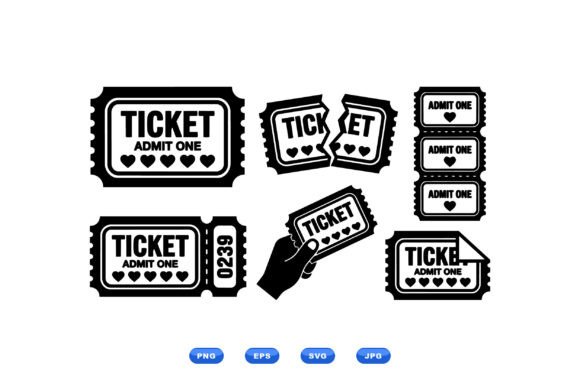
Review: Retro Admit One Ticket SVG for Embroidery
As a designer who spends half my day tweaking stitch paths and the other half worrying about whether a client’s logo will survive a wash cycle, I don’t just look at a design file; I look at its potential in the hoop. When Retro Admit One Ticket SVG landed on my desk, I didn’t just see a cute graphic. I saw a specific mood, a specific product category, and a specific set of technical challenges that come with translating flat vector art into thread. This isn’t just another clip-art download; it is a versatile asset that, when handled correctly, can elevate a simple handmade item into something that feels like a boutique collectible.
The First Impression: Nostalgia Meets Modern Craft
The immediate appeal of this design lies in its retro aesthetic. The "admit one" motif taps into a universal sense of nostalgia—the excitement of an event, the memory of a concert, or the whimsy of a carnival. For the modern crafter, this translates perfectly into the current trend of personalized, experience-based gifting. It feels playful but structured, which is exactly what you want when you are converting a digital file into a physical machine embroidery design.
Visually, the ticket shape offers clean lines and distinct edges. In the world of embroidery files, simplicity is often your best friend. Complex gradients and overly intricate details tend to get lost in the fabric texture or cause puckering. The flat design approach of the Retro Admit One Ticket SVG suggests high readability. Whether you are using it for a tote bag design or a small embroidered patch, the silhouette remains clear. It has a visual personality that says "fun" without shouting, making it suitable for a wide range of audiences, from young adults looking for unique streetwear to parents buying gifts for children.
Real-World Application: Where This Design Shines
I have tested numerous designs in real-world scenarios, and this particular asset fits seamlessly into several high-demand product categories. Let’s talk about practical use cases rather than theoretical possibilities.
- Custom Apparel: Imagine a heavyweight cotton sweatshirt embroidered with this ticket on the left chest. The retro vibe pairs exceptionally well with vintage-wash fabrics. It works as a subtle nod to music festivals or theater nights. The design’s clean lines ensure that even on a textured fabric, the ticket shape holds its form.
- Tote Bags and Market Bags: A canvas tote featuring a large version of this design is a staple for any Etsy seller. The ticket shape allows for creative placement—perhaps running vertically along the side seam or centered on the front. Because it is a Graphics category item, it scales well, allowing you to adjust the size without losing critical detail.
- Baby and Nursery Items: Don’t underestimate the power of nostalgia in baby gifts. A onesie or burp cloth with a soft-colored version of this ticket can be a hit for baby showers. It serves as a fun placeholder for dates ("Admit One: Born May 2024") or simply adds a whimsical touch to nursery decor items like pillow covers.
- Event Branding and Merchandise: For local businesses or community organizers, this design is gold. You can create limited-edition merchandise for a fair, a fundraiser, or a local festival. The "numbered strip" aspect mentioned in the source material allows for personalization, turning a generic product into a unique keepsake.
Technical Considerations: Stitching the Details
Having reviewed the structure of the Retro Admit One Ticket SVG, I have some notes for fellow designers regarding execution. While the design is straightforward, embroidery is a mechanical process that introduces variables like tension, fabric stretch, and thread friction.
Stitch Type Strategy: The ticket borders should likely be executed in a tight satin stitch to give that crisp, finished look typical of actual paper tickets. The interior text or decorative elements might benefit from a combination of running stitch for thin lines and fill stitch if you are adding background color blocks. However, avoid over-stitching. If the design includes tiny text or very fine lines, you must evaluate the stitch density. Too much thread in a small area will cause the fabric to pucker, ruining the professional appearance of the finished product.
Fabric Selection: This design performs best on stable, woven fabrics. Cotton, denim, and canvas are ideal choices. Be cautious with highly textured fabrics like chunky knits or terry cloth; the needle penetration may be inconsistent, leading to skipped stitches or distorted shapes. Similarly, while you *can* embroider on stretchy fabrics like jersey, you need a proper stabilizer to prevent distortion. For custom apparel like t-shirts, always use a cut-away stabilizer to maintain integrity over time.
Thread Color Contrast: The "vibrant" nature of the original graphic suggests bright colors. In embroidery, light-on-dark or dark-on-light contrast is key. If you are placing a white ticket on a black hoodie, ensure your white thread is dense enough to cover the dark background completely. Test your thread colors on scrap fabric first to check for opacity and sheen.
Where to Exercise Caution
There are scenarios where this design requires careful handling. Small hoop sizes (under 4x4 inches) can make tiny details indistinguishable. If the design includes very fine lettering or intricate perforation marks, scaling it down too much will result in a muddy blob of thread. Additionally, curved surfaces like baseball caps can distort flat geometric shapes. You may need to adjust the digitizing slightly to account for the curvature, or place the design on a flatter part of the garment, such as the front panel away from the brim.
Business Value and Customer Perception
For the craft business owner, the value of a design goes beyond aesthetics. The Retro Admit One Ticket SVG communicates professionalism. A well-executed embroidery project signals quality to the customer. When a buyer sees a cleanly stitched ticket design on a handmade product, they perceive higher value, which justifies a premium price point.
Furthermore, the versatility of this design supports brand consistency. You can use the same motif across different products—a kitchen towel, a pillow cover, and a cap—creating a cohesive collection for your shop. This cross-product utility is essential for small shop owners looking to maximize their inventory without designing new assets every week.
Final Verdict: A Solid Asset for the Designer’s Toolkit
In conclusion, the Retro Admit One Ticket SVG is more than just a pretty picture; it is a functional, market-ready design that bridges the gap between digital convenience and tactile craftsmanship. Its retro charm resonates with current consumer trends, and its structural simplicity makes it forgiving for both beginners and experienced embroiderers.
Before committing to a full production run, remember these best practices: test the design on scrap fabric, verify your hoop size constraints, inspect small details under magnification, and confirm licensing terms if you plan to sell the final items. By treating this design with the respect it deserves, you can create stunning personalized gifts and profitable commercial embroidery projects that stand out in a crowded marketplace.
Whether you are an Etsy seller looking to expand your catalog or a hobbyist wanting to add a unique touch to your own wardrobe, this design offers excellent return on investment. It is vibrant, versatile, and ready to bring a bit of old-school flair to your next embroidery project.